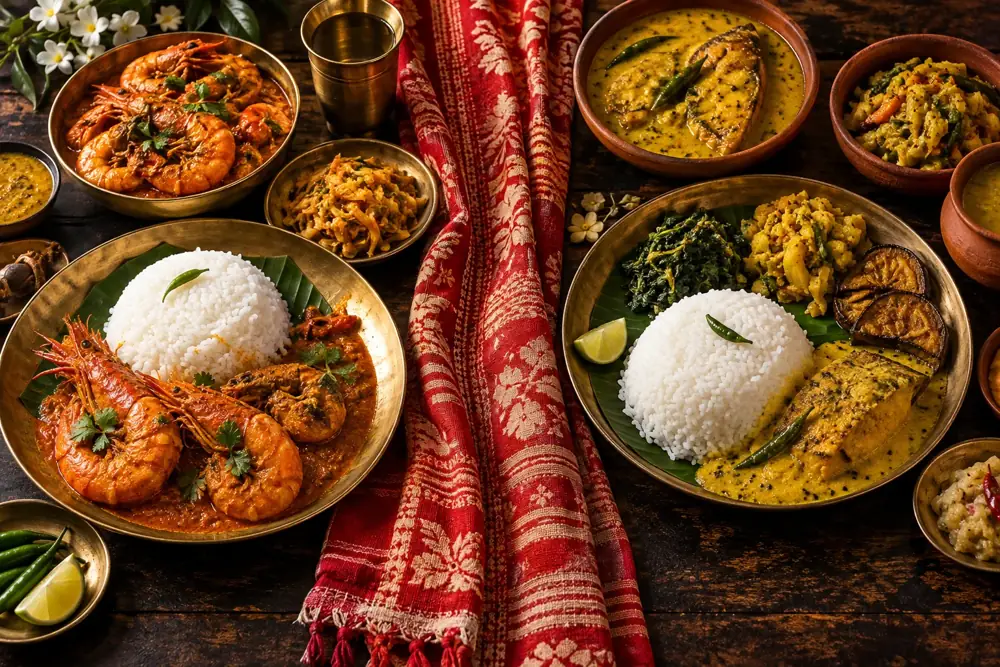
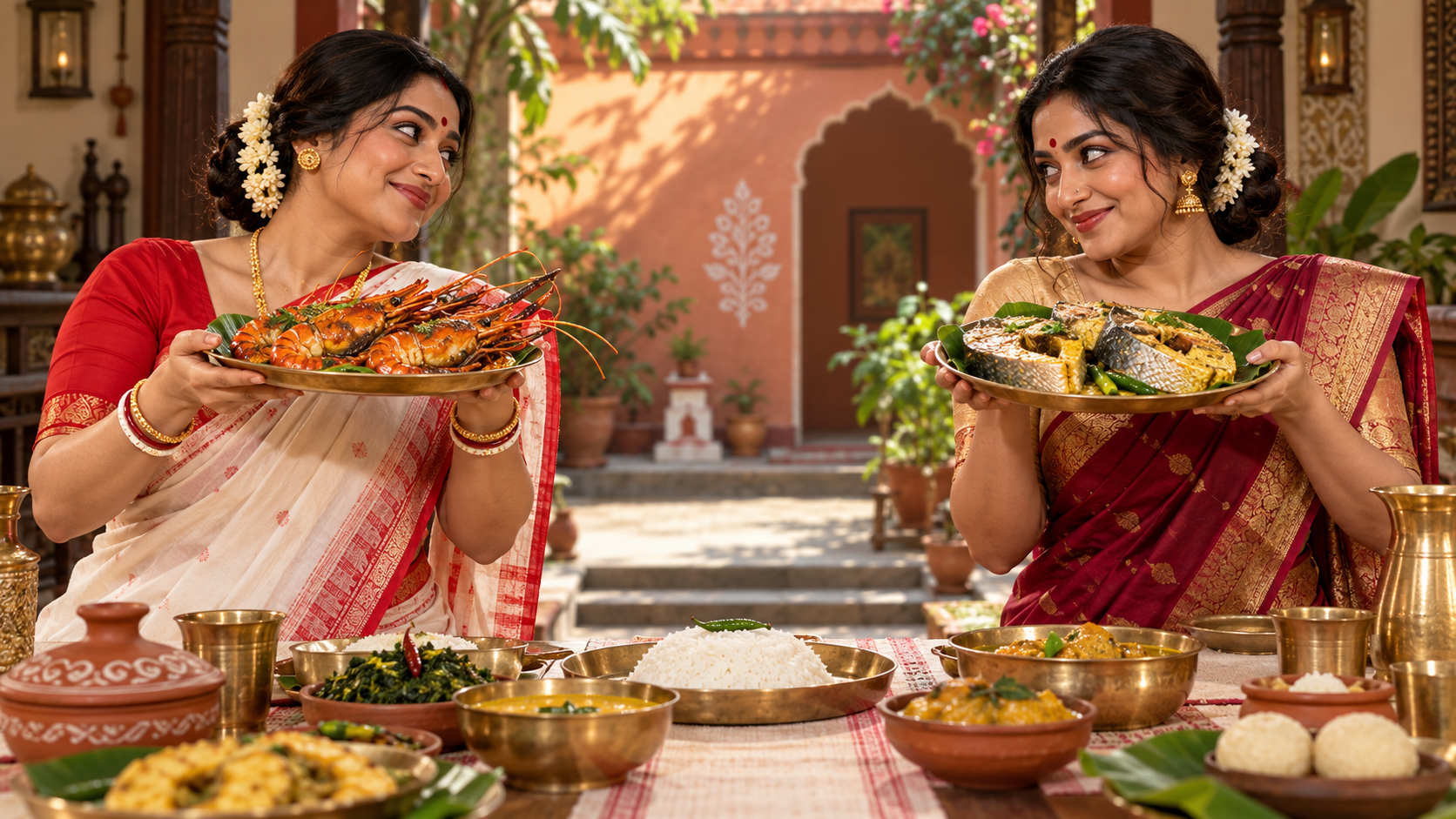
One brings galda chingri, the other brings ilish. They exchange a smile that says, “Let the debate begin.” At a Bengali table, this is less a quarrel than an invitation to eat very well.
Read on until the end for a “Bati” (Bangal + Ghoti) Surprise.
Bengal might not seem like a land which would have major variations in its food. As you fly over the endless estuarine delta to Kolkata you look down on flat fields shimmering green with new rice and the rivers and canals that separate them, and you can almost picture the contents of a Bengali meal on your plate: rice, freshwater fish, and the leafy greens that grow in such abundance in the space between the fields.
You might even find Bengalis agreeing with you on this since rice and fish is so synonymous with Bengal. But ask a little further, about the use of spices, of ingredients like sugar and posto (poppy-seeds) and almost instantly a fierce debate will ensue. Very quickly, you will realize the one big difference that splits Bengal is the food and eating habits of the West Bengalis or Ghotis as they are called, and the Bangals, from East Bengal, now Bangladesh.
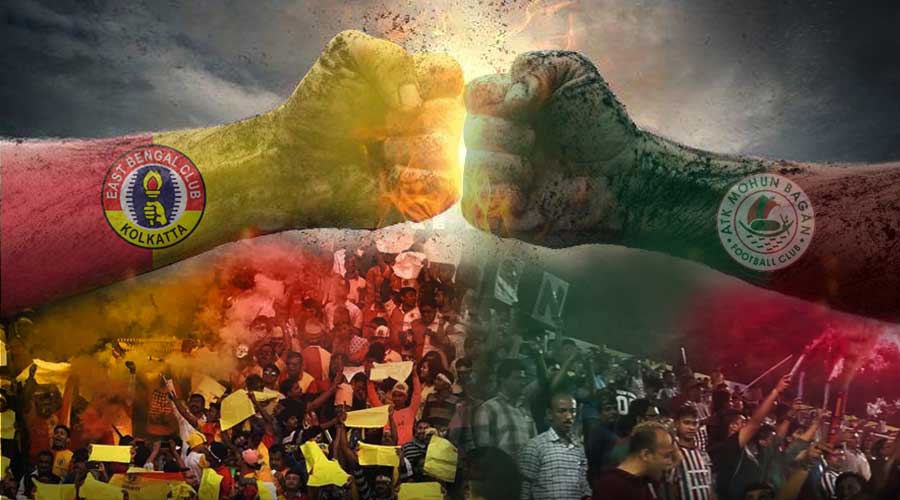
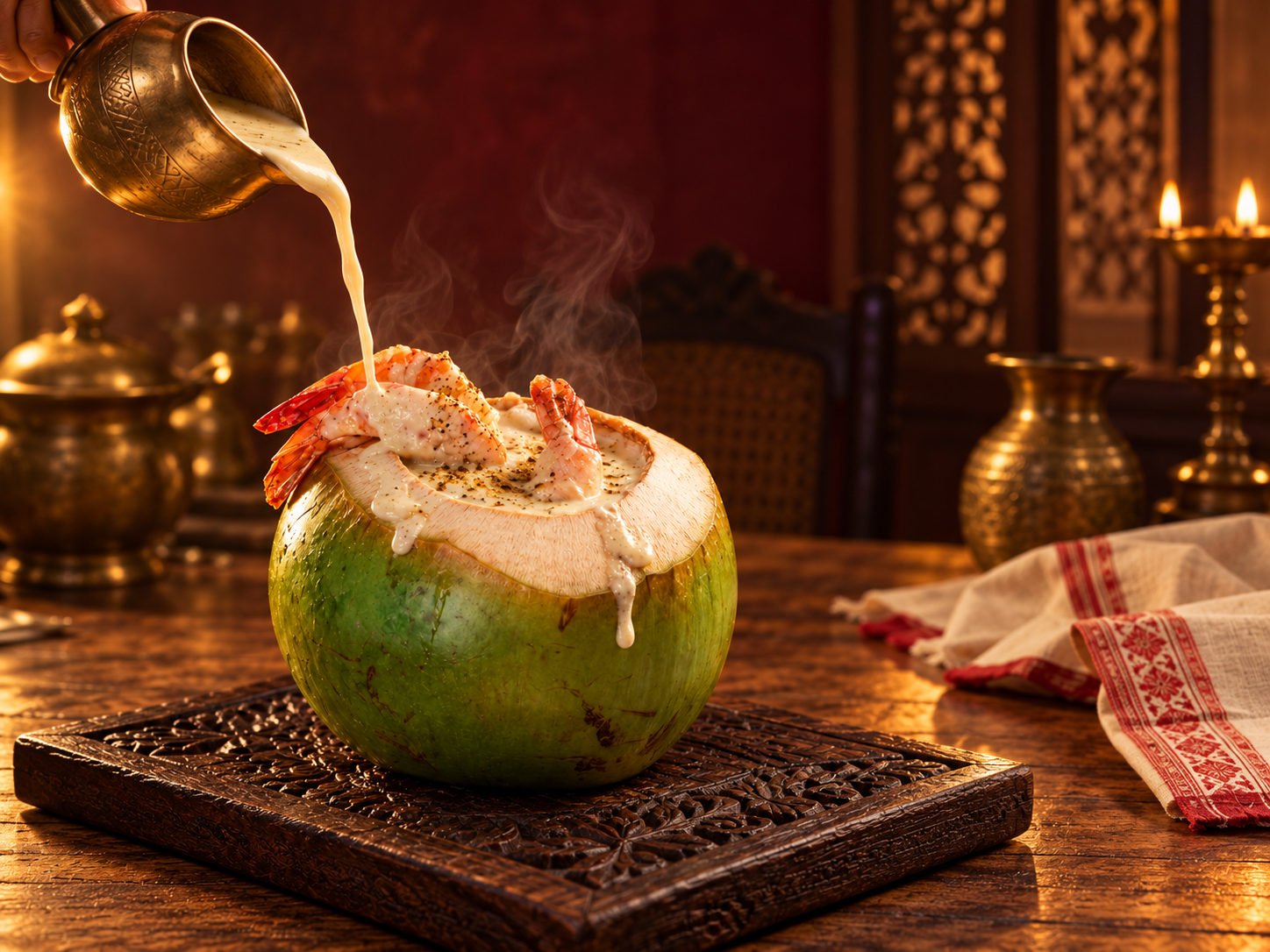
Ghotis by birth are fans of the football club – Mohun Bagan and Bangals usually support East Bengal Club. Any local football match to this date is described as a cultural war for pride and superiority of one against the other. And of course food- is the final stop for the difference. So when Mohun Bagan players win a match against East Bengal they are felicitated with garlands made of specially ordered Galda Chingri (King Prawns) – symbolic of Ghoti food. When East Bengal wins a match against Mohun Bagan they feast on Hilsa- symbolic of Bangal food.
When it comes to food, Ghotis are known to add sugar in everything. A pinch of sugar according to any ardent Ghoti, would make all difference to the dish else it will start tasting like a Bangal dish. Bangals, again are known to eat hot, spicy food.
While Ghotis would refrain from eating stem or peels of vegetables, some the most innovative vegetarian Bengali dishes like the Khosha Chchoris which are usually cooked from the leftover peels of vegetables. For instance, a brilliant way of re-using the peels of lau is to chop them finely and fry them in mustard oil with green chillies and onion seeds, with salt added according to your taste.
If one digs a little deeper, they’ll find further cultural divides, especially with Pujas and Weddings.
For instance, while Bangals celebrate Laxmi Puja on the fifth day after Durga Puja (Kojagari), Ghotis celebrate the occasion during Diwali. While Ghotis blow the conch on special occasions, the Bangals ululate. It goes to extents where Bangals mock a Ghoti’s nasal intonation while speaking Bangla while the Ghotis take a dig on Bangals’ gruff delivery.
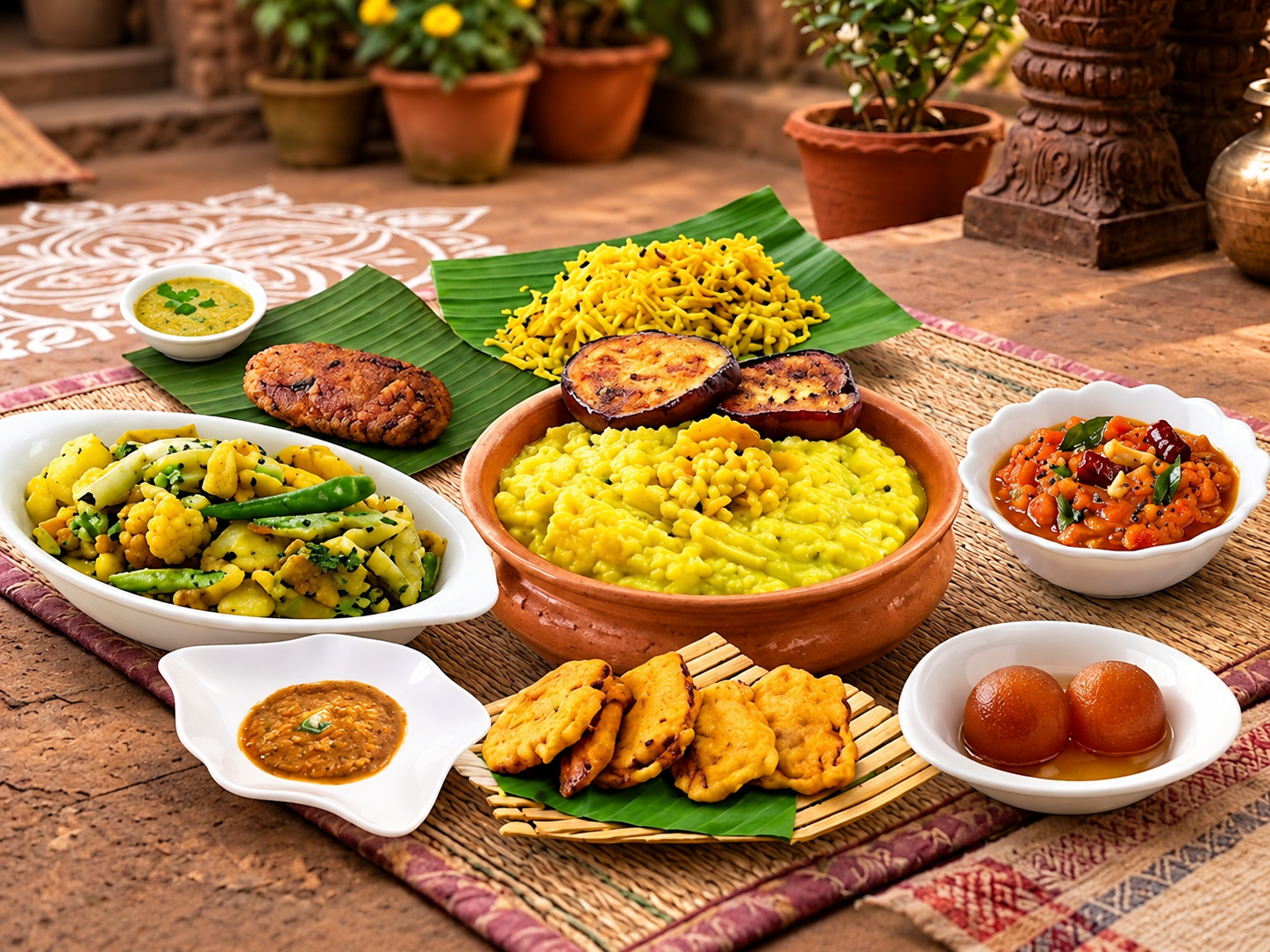
But amidst all these differences, both Bangals and Ghotis are united by their love for similar things. And one major unifying factor is Khichuri – specifically – Ashtami’r Bhoger Khichuri.
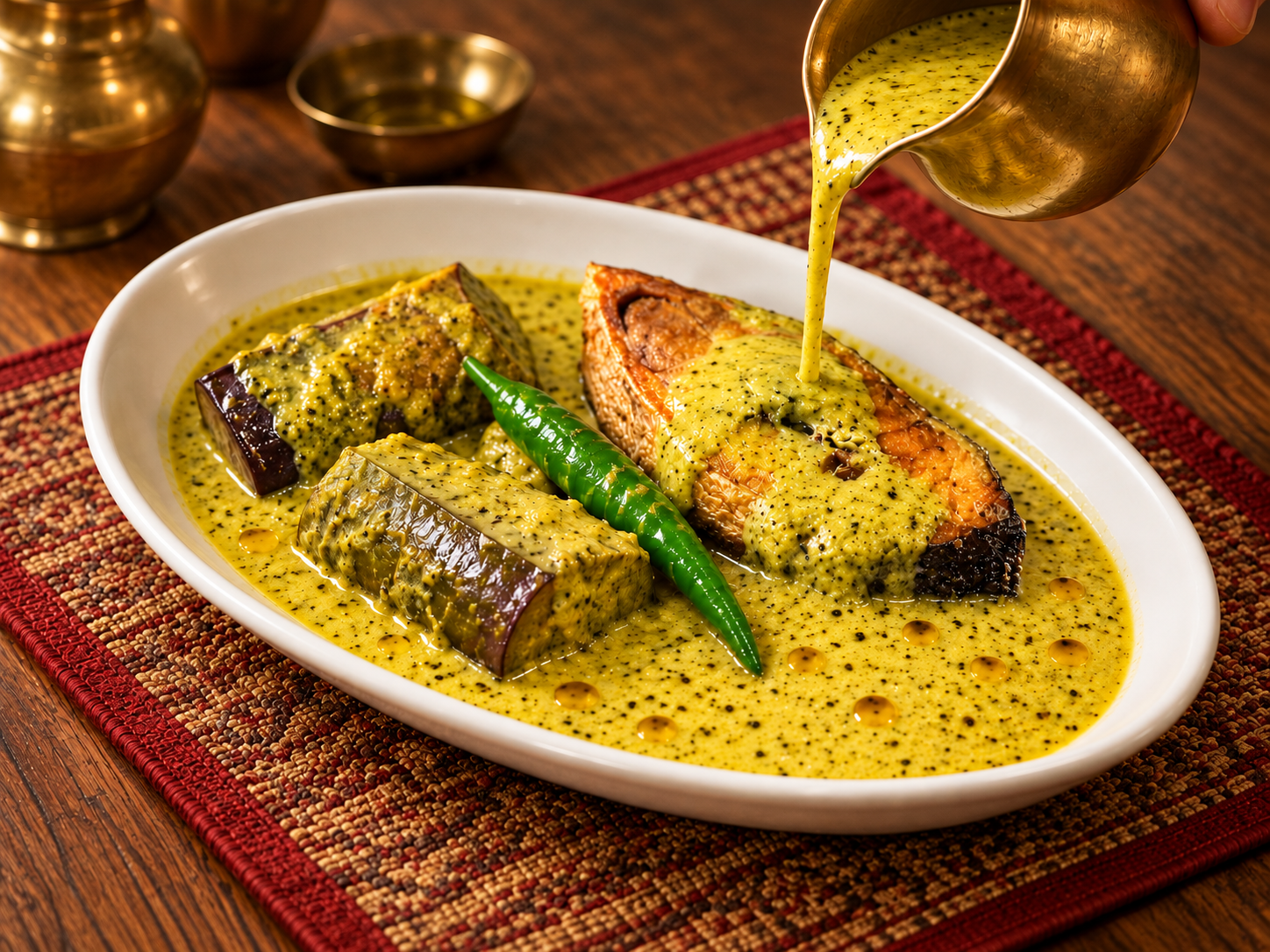
Of course, Ghotis enjoy their plate of this “basanti” goodness with some Labra, while the Bangals do so with Joda Ilish – sticking to their love for this rather tasty fish.
The Ghoti and Bangal plates, side by side
Ghoti
Bangal
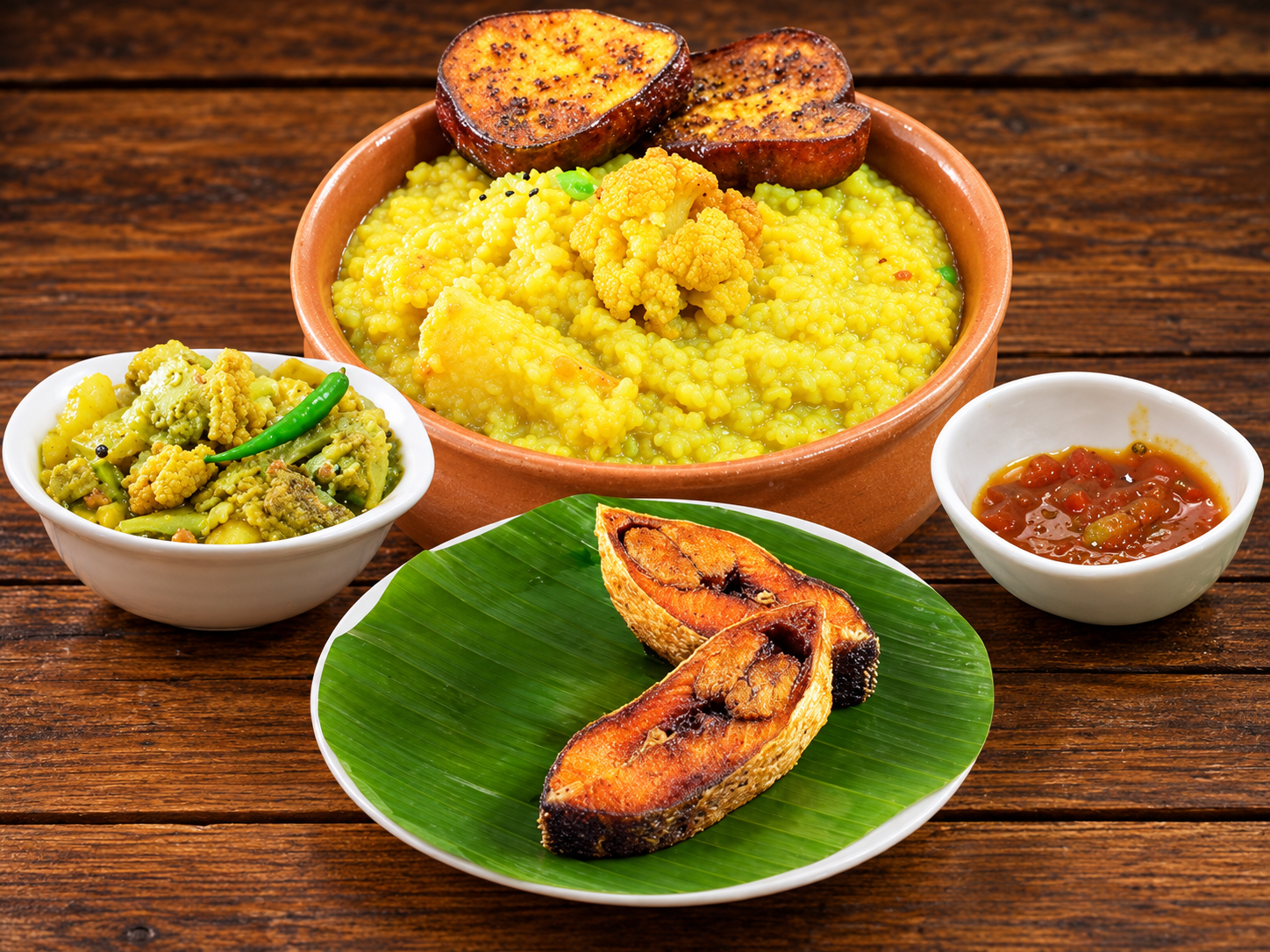
Kolkata Beckons’ Khichuri, Labra and Joda Ilish Combo – The Taste of Bengal in one plate.
Labra is a mixed vegetable dish with a multitude of indigenous veggies, fried and cooked individually, before coming together in a gravy containing ginger paste, grated coconut and a few choice spices. It does take a while to cook, so it’s familiar for the entire family to band together to prep the veggies, fry each vegetable separately before the gravy is made following the chief Matriarch’s methods.
Joda Ilish Bhaja on the other hand is fairly straightforward. You take the Ilish Maach, rub salt and turmeric on it, and fry it in Mustard Oil – about 3-4 mins per side.
Each of the dishes has a spectacular taste and one can never entirely judge what would be a better accompaniment to Khichuri.
Actually, you can! Click here to avail a Pujo Special combo – Khichuri, Labra and Joda Ilish Bhaja from Kolkata Beckons. Have it all, and then let us know in the comments – is Labra better with Khichuri or the Joda Ilish? Our guess – they’re both equally delicious.
The Bati surprise
Picture the two women again. The Ghoti offers a prawn; the Bangal offers a piece of ilish. Both reach for the khichuri. The rivalry has done its job: it has brought more food, more stories and more laughter to the same table. That is the Bati surprise—Bangal and Ghoti together, each keeping what makes her plate special.
Which pairing wins your heart: khichuri with labra, khichuri with joda ilish, daab chingri or shorshe bhapa ilish? Tell us below. There is no need to choose only one.
Explore the feast today:
Fifth Season Theme Dining

Conversation