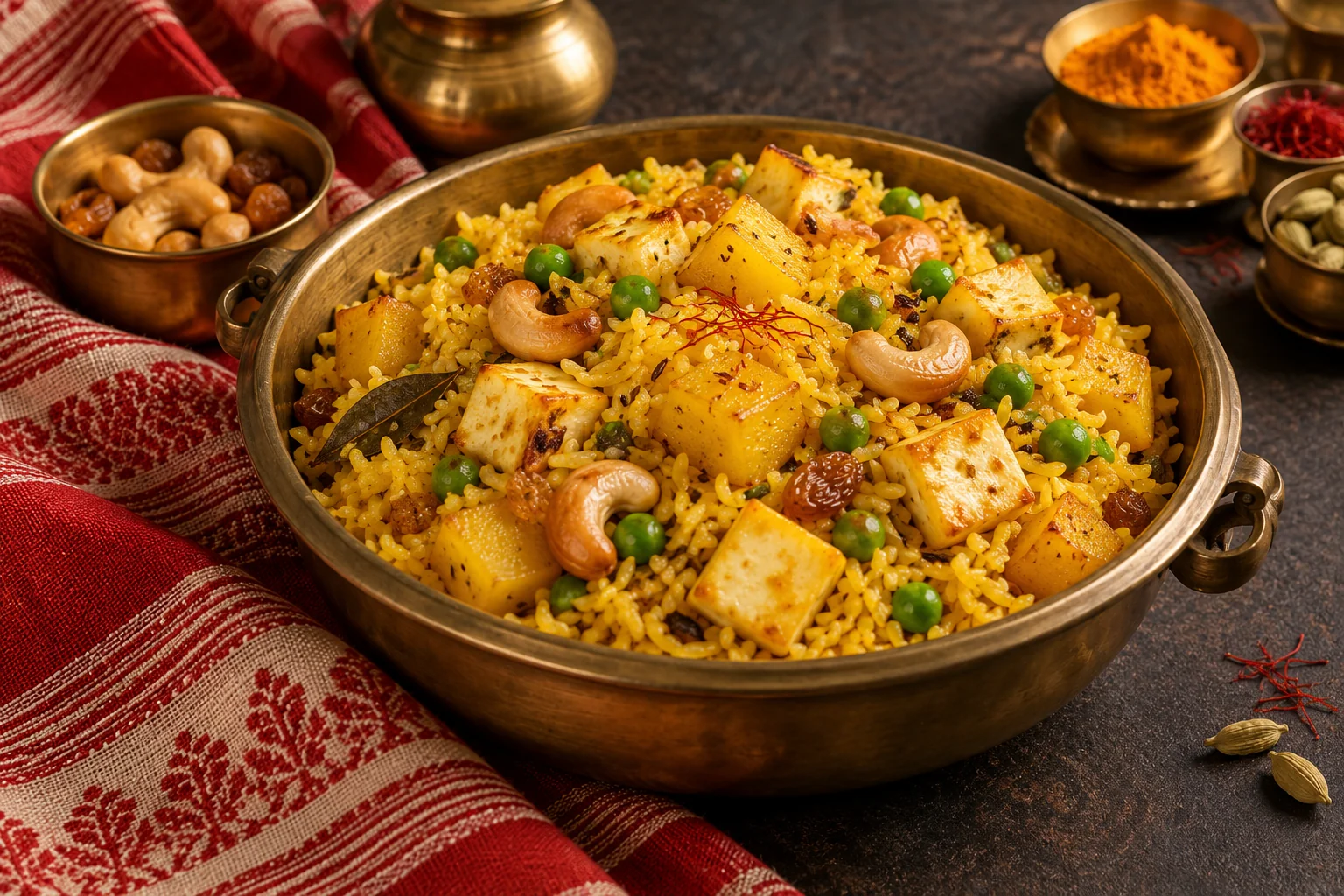
A vegetarian interpretation of muri ghonto, made with fragrant Gobindobhog rice, paneer, vegetables and warm spices. This recipe honours the author’s great mother-in-law, Gogo.
Ingredients & quantities
Rice & vegetables
- About 250 g Gobindobhog rice, soaked for 20 minutes
- About 60 g green peas, optional
- About 200 g diced potato
- About 200 g paneer cubes
Aromatics & spices
- About 30 g each hung curd, ginger paste, coriander paste and cumin paste
- 3–4 green chillies; 2 dried red chillies
- Gorom moshla paste: 2-inch cinnamon stick, 6 cardamoms and 6 cloves
- 1–2 bay leaves
- About 10 g turmeric powder
Cooking & finish
- About 40 g ghee; 30 g neutral oil
- About 30 g cashews; 20 g raisins
- About 30 g sugar; 30 g grated coconut
- About 100 ml water for potatoes, then about 500 ml for rice
- Salt to taste (the original lists about 2 tbsp; season gradually)
Method
- Prepare the rice. Soak for 20 minutes, drain, lightly fry in a little ghee for 2 minutes and set aside.
- Roast and reserve. In oil, lightly fry paneer, then cashews and raisins. Lift each out separately.
- Build the masala. Temper the oil with dried chillies and bay leaves. Fry ginger, cumin and coriander pastes. Add coconut, turmeric and green chillies; cook until fragrant. Add the potato and cook for 5 minutes.
- Soften the potatoes. Stir in hung curd and about 100 ml water. Cook until the potato is just tender and the liquid has reduced.
- Cook the rice. Coat the fried rice in the masala. Add about 500 ml water, cover and simmer until nearly cooked. Add peas and paneer; cook until the water is almost absorbed. Stir in sugar.
- Finish. Fold in ghee and gorom moshla paste. Top with fried cashews and raisins. Taste and adjust salt.
Cook’s tip
The published salt amount is high for many home kitchens; add it gradually and taste before serving.
Using modern equipment
Use an induction hob on low to medium heat for the covered rice stage. A kitchen timer helps you check before the rice catches on the bottom; finish uncovered if there is excess liquid.
At the table
Serve warm as a complete vegetarian centrepiece, or with luchi.
Your tips & comments: What would you keep true to the Bengali dish, and what would you adapt? Tell us below.

Conversation
Could this recipe appeal internationally? If not, what would you change while keeping its Bengali character? I’d love to hear your thoughts.