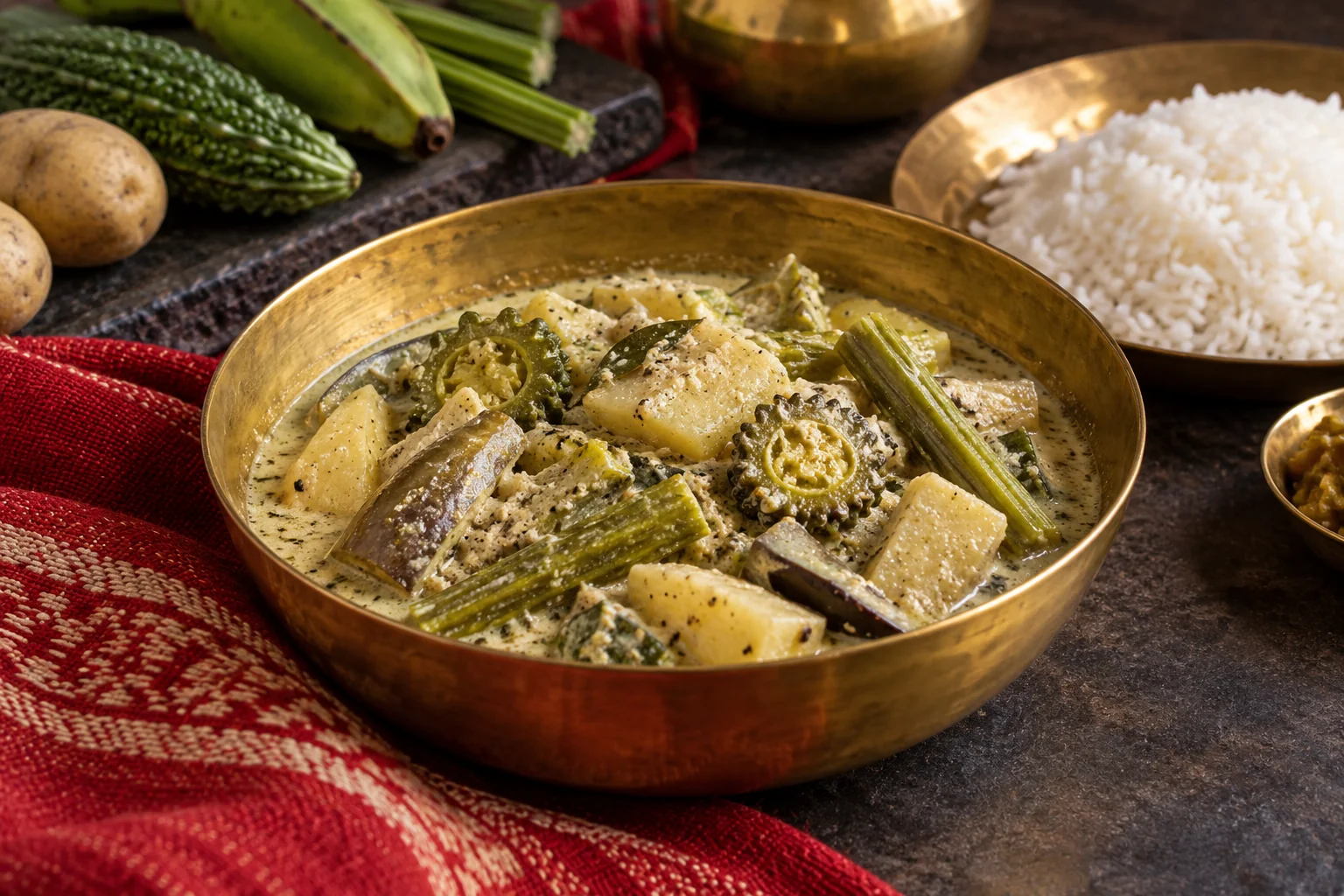
There is an urban legend among a lot of Bengali families that in the early 1500s, Chaitanya Mahaprabhu came across a rather stubborn fisherman who wouldn’t budge an inch from his staunch non-vegetarian stance. It was his adamancy that forced Mahaprabhu to denounce Bengal and move to Puri (in present day Odisha). More than 500 years later, that fisherman’s spirit seems to have been kept alive and how by our present day Bengali brethren. 98.55% of Bengalis are non-vegetarians – that’s the highest concentration of non-vegetarians among all Indian states with Andhra Pradesh, Kerala and Assam just behind us.
There’s evidence to support that too. Bengalis eat in courses, and at least 2 out of the 5 courses will contain some meat preparation. Tuesdays and Saturdays – the “Niramish” days in a ton of households are looked upon with disdain as if all the joys of the dinner table have been sucked out.
A mere 3 years ago, however, there was a genuine shift towards the acceptance of “Niramish khaabaar” among Bengalis. Sure, a meat scandal rocked Bengal leading to meat sales touching rock bottom in the state, but vegetarian food was gradually making a mark in the kitchens of Bengali households, and not just as replacement for meats, but as individual dishes that earned their right to be on the dinner tables. The health benefits of vegetables was being realized in droves, and now, it wasn’t just “aloo” or “begun” that were bought from the markets by Bong dads to be made “bhajas” out of.
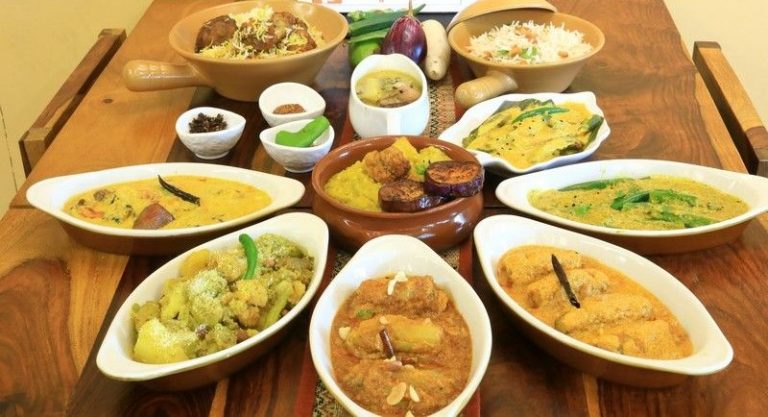
Vegetarian food in Bengal is crafted and presented in a gastronomically efficient way. Dishes are made to either cleanse your palette, or serve as easy yet hearty comfort food (like the “bhateys” or the “bhortas”), or replace the red proteins (such as “channa” or “dhoka’r dalna”), or just serve as tasty accompaniments to a large meal or even alcohol. Posto’r bora with beer while watching football? Sounds like an ideal Bangali evening! Even within preparations, there is a multitude of variations that signifies the diversity of each district. Shukto, for instance, has 3-4 variations with either papaya or raw banana or bottle gourd and even cucumber being the hero ingredient.
With that in mind, over the next 4 weeks, we’ll re-acquaint you with Bengal’s four most popular vegetarian preparations, starting with “Shukto” this week.
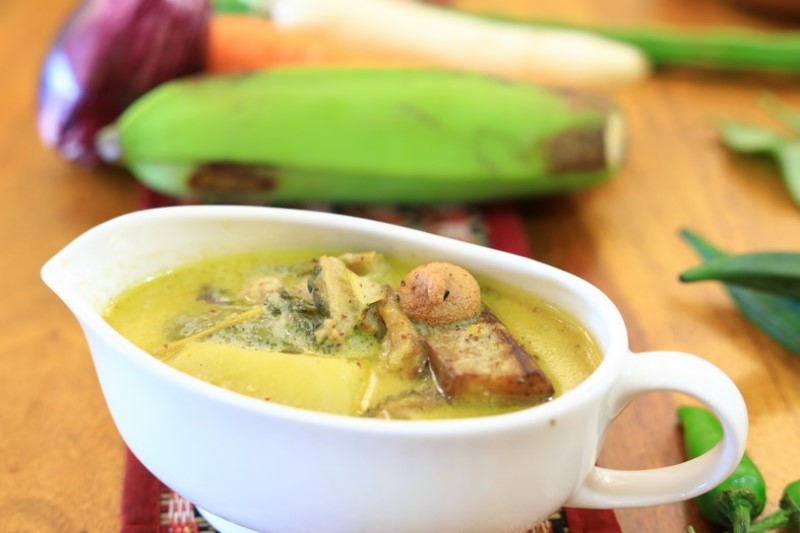
Shukto is a mild, sometimes bitter, milky curry that – within the structure of the Bengali meal is eaten after shaak (greens) and before dal (lentils). It is said to stimulate the appetite and prepare the palate for the oncoming spicier courses and the dessert in the end.

Conversation
Could this recipe appeal internationally? If not, what would you change while keeping its Bengali character? I’d love to hear your thoughts.